
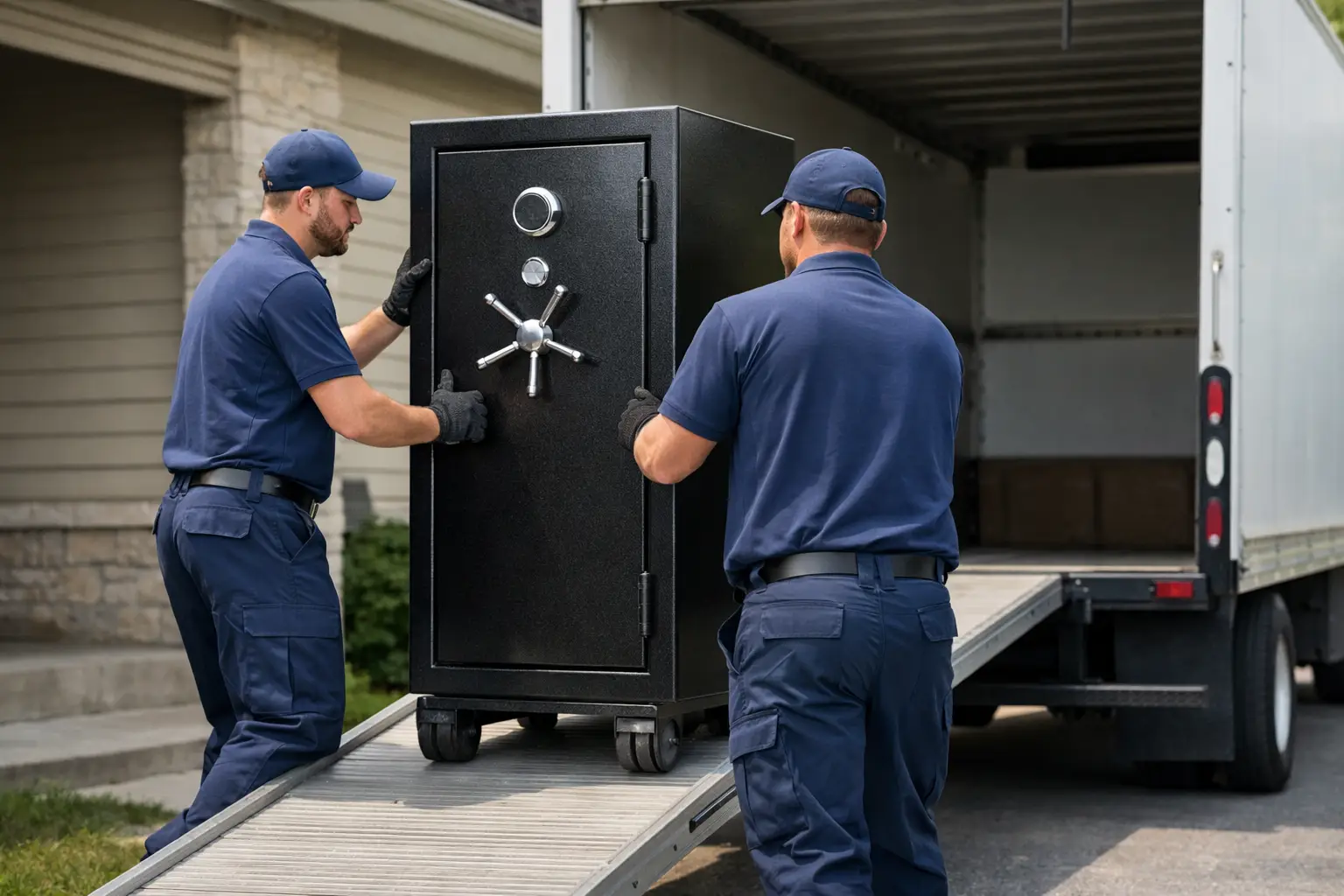
A gun safe is not just another heavy item on a moving list. Many models weigh several hundred pounds before their contents are considered, and their concentrated weight can damage flooring, stairs, walls, and people when a move is rushed. This gun safe relocation guide explains how to prepare for the job, identify real risks, and decide when professional help is the right call.
Start Your Gun Safe Relocation Guide Before Moving Day
The safest gun safe move is planned before anyone touches the safe. Start by identifying the manufacturer, model, exterior dimensions, and approximate empty weight. The product manual, purchase paperwork, or a manufacturer label inside the door may provide these details. If you cannot confirm the weight, assume it is heavier than it looks and get an in-person assessment from a specialty moving team.
Measure the safe and then measure every part of its route. That includes doorways, hallways, stair landings, elevator openings, garage thresholds, gates, and the final room at the new property. A route that looks open may still fail at a tight corner or a narrow landing.
Also consider the surface beneath the safe. Tile can crack under concentrated pressure, hardwood can gouge, and a soft or uneven outdoor path can make moving equipment unstable. A clear route matters, but so does a protected, level route.
Confirm the Destination First
Choose the safe’s new location before the move begins. A ground-floor placement is often simpler, but security, access, and the structure of the home all matter. If the safe will be placed upstairs, on a raised foundation, or in a room with concerns about floor support, ask a qualified professional for guidance before scheduling the relocation.
Think through delivery access as well. DFW homes range from newer open-layout properties to older homes with narrow entries, split levels, and tight stairways. Knowing the destination conditions early helps prevent a crew from arriving only to find that the safe cannot safely reach its intended room.
Prepare the Safe and Its Contents Securely
Before relocation, remove firearms, ammunition, valuables, documents, and removable interior accessories from the safe. Firearms should be unloaded, secured separately, and transported in accordance with applicable federal, state, and local laws. Keep access controlled throughout the process, and do not leave firearms or safe keys where movers, children, visitors, or others can access them.
A safe should be empty not only for security but also for weight. Shelves, door organizers, and stored items can add substantial pounds and can shift during transport. Remove what you reasonably can, pack those contents separately, and keep an inventory for your records.
Secure the safe door according to the manufacturer’s instructions. Avoid improvised methods that could damage the lock, door, finish, or internal components. If the safe has an electronic lock, have the key, override information, fresh batteries if applicable, and manufacturer documentation available. Never share access codes with anyone who does not need authorized access.
Assess the Route and Protect the Property
Clear the route completely before moving day. Remove rugs, décor, cords, small furniture, pet items, and anything that could create a trip hazard. Keep children and pets away from the work area. This is one job where spectators can quickly become an added safety concern.
Protecting the house is part of protecting the safe. Professional crews may use floor runners, furniture pads, plywood, and specialized equipment based on the surface and route. The right protection depends on the property. For example, a ground-level concrete path presents different concerns than a staircase with hardwood treads.
Pay close attention to transitions. Door thresholds, driveway slopes, ramps, uneven pavers, and wet surfaces can all change the risk level. If rain is expected, make a backup plan rather than assuming the move can proceed normally. Water and heavy rolling equipment are a poor combination.
Do Not Treat Stairs as a Small Detail
Stairs are often the deciding factor in whether a gun safe relocation should be handled by trained movers. Weight, angle, landing size, handrails, floor material, and the ability to maintain control all matter. A safe that can move easily across a ground floor may become a high-risk item on even a short staircase.
Do not rely on untrained friends, household furniture dollies, or a few extra people to solve a stair problem. A serious injury or damaged home can cost far more than arranging specialized moving service from the start.
When Professional Gun Safe Movers Make Sense
Professional gun safe relocation is usually the safer option when the safe is especially heavy, the route includes stairs, access is tight, or the move involves an expensive home finish. It also makes sense when you do not have the right equipment, enough trained help, or confidence in the route.
Ask moving companies direct questions before booking. Confirm that they handle gun safes specifically, not simply heavy furniture. Ask whether the crew is insured, what equipment they use for specialty items, how they protect floors and walls, and whether the estimate accounts for stairs, long carries, or difficult access.
Transparent pricing matters here. A low initial number can change quickly if a company has not asked about the safe’s weight, stairs, distance from the truck, or destination conditions. Provide clear photos and measurements when requesting a quote, and disclose anything unusual about either property. Accurate information gives you a more realistic estimate and helps the crew arrive prepared.
Great White Moving Company Fort Worth provides specialty-item moving for gun safes with trained, insured crews and clear communication about the conditions that affect the job. For homeowners and renters, that preparation can turn a high-risk moving task into a controlled, professional process.
What to Expect on Relocation Day
On moving day, show the crew the full path from the safe to the truck and from the truck to the final placement area. Point out gates, slopes, stairs, fragile flooring, low ceilings, and tight turns. Then give the crew space to work. The people moving the safe need a clear route, steady communication, and the ability to focus.
Do not try to help by lifting, pushing, or bracing the safe unless you are specifically directed by the crew and can do so safely. Heavy-item moves depend on coordinated handling. An unexpected push or a person stepping into the route can make a controlled move less predictable.
Before the truck leaves, confirm that all required accessories, keys, documentation, and separately packed contents are accounted for. Keep firearms and ammunition under your own control and transport them separately as required by law.
Placement and Reinstallation at the New Home
Once the safe reaches the new home, confirm the exact placement before it is lowered into position. Moving it a few inches after placement may not be simple, particularly on carpet, tile, or wood flooring. Check door swing, closet clearance, and practical access for the owner.
If the safe will be anchored, follow the manufacturer’s instructions and consider using a qualified installer. Anchoring methods depend on the safe model and the floor construction. Do not guess about fasteners or drill into a surface without understanding what is beneath it.
After placement, inspect the exterior, door operation, lock function, and interior components before restocking. Reinstall firearms, ammunition, and valuables only after the safe is stable, operational, and accessible only to authorized users.
A careful plan protects more than a valuable piece of equipment. It protects your home, your moving budget, and everyone around the job. When the route, weight, or access raises questions, choosing trained, insured specialty movers is a practical way to keep your relocation moving in the right direction.
