
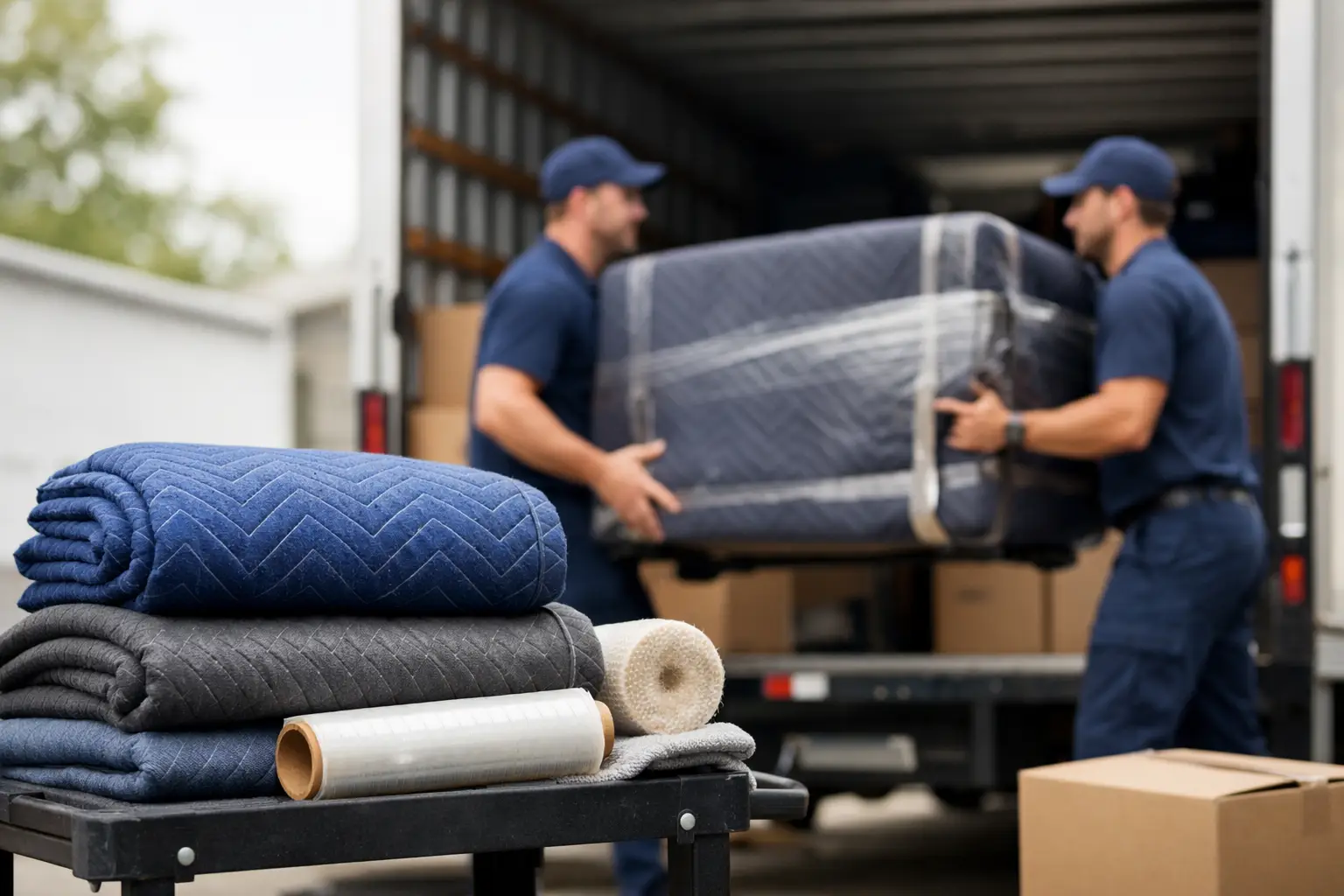
A torn sofa arm or chipped dresser corner usually happens before the truck even leaves the driveway. That is why a real moving blanket review should focus less on marketing claims and more on what these blankets actually do under pressure, around tight corners, and during stacking inside a truck.
If you are comparing moving supplies, the biggest mistake is assuming all moving blankets are basically the same. They are not. Some are built to reduce minor scuffs on short local moves. Others are thick enough to help protect wood furniture, appliances, and framed items through heavier loading, unloading, and long-distance transport. The difference shows up fast when items shift, rub, or get compressed in transit.
What a moving blanket is supposed to do
A moving blanket is not armor. It is a layer of padded protection designed to reduce surface damage from friction, light impact, and contact with other items. That matters for dressers, headboards, dining tables, washers, dryers, and office furniture, where scratches and edge damage are common.
The best blankets also help with another problem people overlook – load stability. Wrapped furniture stacks more safely when surfaces are cushioned and less likely to slide against each other. That does not replace straps, good loading technique, or careful handling, but it does give your belongings a better buffer.
This is also where expectations need to stay realistic. A blanket can help prevent finish damage, small dents, and rubbing. It will not fully protect a glass top that is packed incorrectly or a solid wood piece that is dropped down a stair. Good materials matter, but technique matters just as much.
Moving blanket review: the features that matter most
When people shop for blankets, they usually notice price first and thickness second. In practice, there are four things that matter more than the packaging claims: weight, outer fabric, stitching, and size.
Weight is usually the clearest sign of protection level. Lightweight blankets are easier to carry and cheaper to buy, but they tend to bunch up, shift around, and offer less cushion on corners and edges. Midweight blankets are often the practical middle ground for standard household furniture. Heavy-duty blankets give better padding, especially for wood pieces and bulky items, but they are more expensive and harder to handle in large quantities.
Outer fabric affects how the blanket behaves during the move. Smoother covers slide more easily around furniture and may be easier to position, but they can also slip if not secured well. Cotton-blend styles often feel more stable and substantial, though quality varies. Non-woven and lower-cost polyester versions may be fine for one-time use, but they usually do not hold up as well under repeated jobs.
Stitching matters because moving blankets get dragged, folded, cinched, and stacked. If the stitching is weak, the fill shifts and protection becomes uneven. A blanket with decent quilting and reinforced edges usually lasts longer and performs more consistently.
Size is simple but often overlooked. If a blanket is too small, it protects only the center of the item while leaving corners exposed. That is exactly where damage often happens. Larger blankets are more versatile, especially for sectionals, dining tables, large mirrors, and taller case goods.
Heavy-duty vs. cheap blankets
This is where most moving blanket review articles get too neat. The truth is that cheap blankets are not always a bad buy. It depends on what you are moving and how you are using them.
If you are protecting garage shelving, plastic storage bins, or low-value furniture during a short move across town, a lighter and cheaper blanket may be enough. It can reduce rubbing and help keep surfaces cleaner. For college moves, temporary storage, or basic wall protection in hallways, budget blankets often do the job.
But if you are moving hardwood furniture, antiques, appliances, or anything with a finish you care about, cheap blankets usually show their limits fast. They compress too easily and do not give much protection when items are stacked tightly in a truck. For families moving a full home, or businesses relocating desks, conference tables, and electronics, heavier blankets are usually worth the extra cost.
The trade-off is straightforward. Heavy-duty blankets protect better, but they take up more space, weigh more, and cost more. Lighter blankets are cheaper and easier to manage, but they offer less margin for error.
The biggest performance issue is how the blanket is secured
Even a very good blanket performs poorly if it is draped loosely and left to slide off. During loading, unloading, and transport, blankets shift constantly unless they are secured with stretch wrap, tape used carefully, rubber bands, or moving straps.
This is one reason professional movers generally get better results from the same supplies. They know where furniture takes contact, how to wrap without trapping hardware or damaging finishes, and how to keep padding in place when pieces are carried through doorways and stairwells.
For example, a dresser needs more than a blanket over the top. The corners, face, and sides all need coverage if it is going to be stacked near other items. A dining table often needs separate protection for the top and legs. Refrigerators and washers need padding that stays put while they are tilted and rolled. The blanket itself matters, but the application decides how much real protection you get.
What these blankets do well, and where they fall short
A fair moving blanket review should give credit where it is due. Good moving blankets are one of the most cost-effective ways to reduce common moving damage. They are reusable, flexible, and useful on a wide range of items. They also help protect door frames, banisters, elevator walls, and flooring during active moves.
Where they fall short is in precision protection. They are not a replacement for custom crating, specialty boxes, edge protectors, mattress bags, TV boxes, or proper packing paper. If you are moving artwork, glass, marble, or highly delicate electronics, a blanket should be part of the protection plan, not the whole plan.
They also hold dirt and debris if reused carelessly. That can become a problem with light upholstery, mattresses, and soft finishes. Cleanliness matters more than people think, especially in storage or multi-stop moves.
When renting or buying blankets makes sense
For a one-time move, renting can make sense if quality is good and the blankets are clean. It lowers upfront cost and saves you from storing bulky supplies afterward. The downside is consistency. Not every rental blanket is in great shape, and worn padding offers less protection.
Buying makes more sense if you are doing a staged move, packing over several weeks, placing items in storage, or planning multiple moves. It also gives you control over quality. If you own valuable furniture, that control matters.
For many households, the practical answer is mixed use. Buy a smaller number of better blankets for your highest-value items, then use lighter protection where the stakes are lower. That approach keeps costs reasonable without treating every piece of furniture the same.
Who should be picky about moving blankets
If you have solid wood furniture, large appliances, specialty items, or narrow access points, blanket quality matters more. Tight apartment stairs, older homes with tricky corners, and office moves with shared hallways all create more contact risk. In those situations, better padding and better handling pay off.
That is especially true in busy areas around Fort Worth and the broader DFW region, where a move may involve elevators, long carries, loading docks, or quick weather changes. Protective materials need to work in real conditions, not just in a product photo.
Households with basic, replaceable furniture may not need premium supplies across the board. But if there is even one item you would be upset to damage, it is worth thinking beyond the cheapest option.
Final take on this moving blanket review
A good moving blanket is not just thick. It is clean, durable, properly sized, and secured correctly around the item it is protecting. That may sound simple, but it is the difference between a blanket that prevents damage and one that only makes you feel better during loading.
If your move includes furniture you care about, choose quality where it counts and pair it with careful handling. And if you want fewer variables on moving day, working with an insured crew that already knows how to protect, wrap, and transport furniture can save more than the cost of a stack of blankets ever will.
