
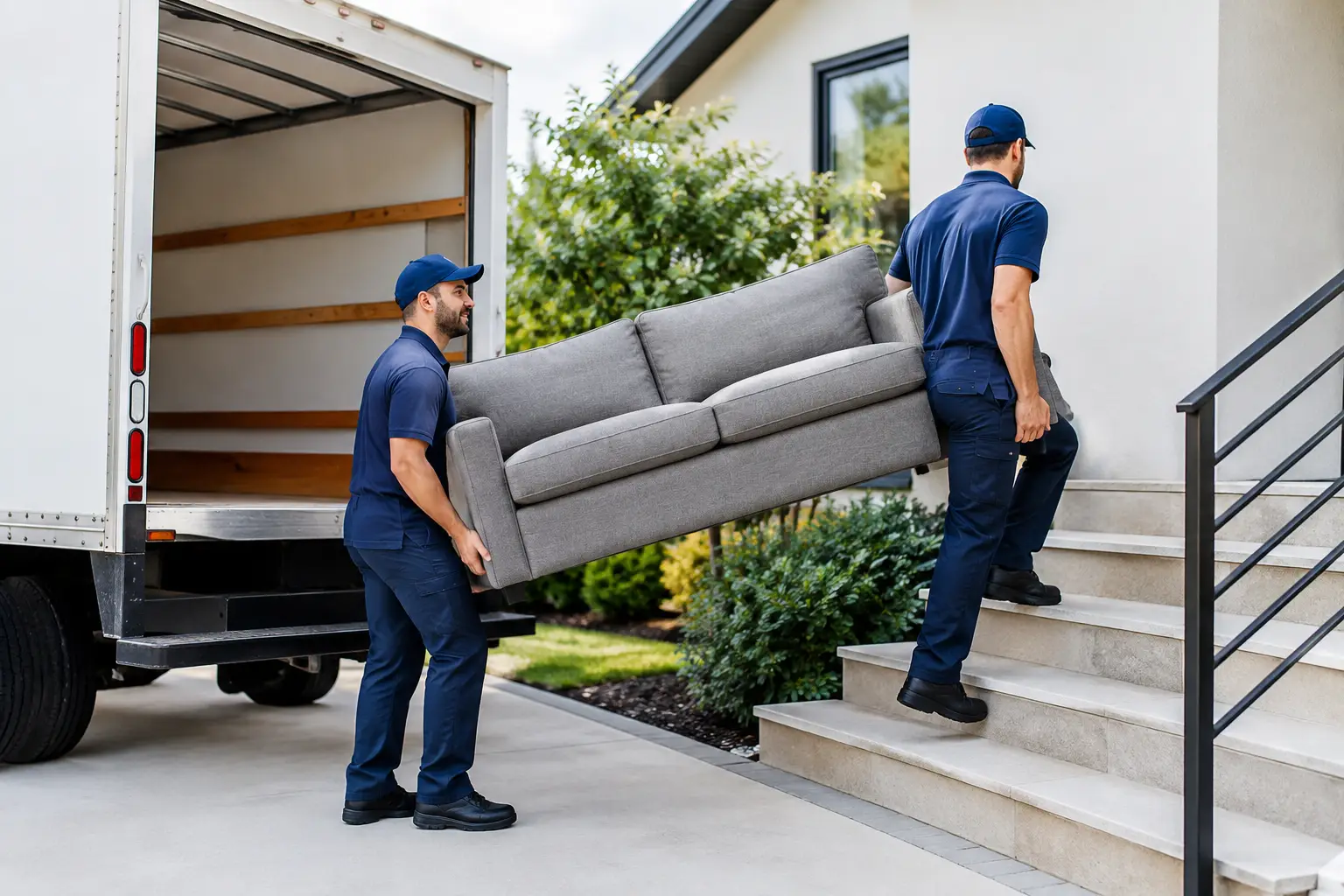
A sectional that fits perfectly in the new upstairs living room can become a serious problem halfway up a narrow staircase. Moving heavy furniture upstairs is not simply a matter of strength. It requires a clear route, the right equipment, coordinated lifting, and a realistic decision about when the risk is too high to handle yourself.
A damaged banister, cracked drywall, injured back, or dropped piece of furniture can cost far more than professional moving help. Before anyone starts lifting, take a few minutes to assess the job. That preparation protects your home, your furniture, and the people doing the work.
Start With the Stairway, Not the Furniture
Measure the furniture before moving day, then measure the full path it must travel. Check the width of the stairwell, landings, turns, ceiling height, doorway openings, and any light fixtures that hang into the route. A piece may fit through a doorway but still fail to clear a tight turn at the top of the stairs.
Measure the item at its widest, tallest, and deepest points. For sofas, that often means measuring with the legs removed and cushions taken off. For dressers, armoires, and shelving units, remove drawers and detachable components first. This reduces weight and can provide the extra inch or two needed to make a difficult turn.
Do not guess based on how the item looked in the previous home. Staircases vary widely across Fort Worth-area homes, apartments, townhomes, and older properties. A narrow staircase with a low ceiling needs a different plan than a wide, straight stairway in a newer house.
Prepare the Furniture and the Home
Furniture should be emptied, disassembled where practical, and wrapped before it reaches the stairs. Drawers, glass shelves, loose hardware, and removable legs create unnecessary weight and shifting hazards. Put hardware in labeled bags and keep each bag with the matching item.
Use moving blankets to protect wood, upholstery, corners, and finishes. Secure the blankets with stretch wrap or moving bands, not tape directly on the furniture. Tape can pull finish from wood or leave adhesive behind. Cardboard corner protectors are especially useful for cabinets, headboards, and large framed pieces.
Protect the home as carefully as the furniture. Cover stair treads if they are hardwood or easily marked, and pad railings, doorway trim, and tight corners. Remove rugs, shoe racks, wall décor, and anything else that could cause a trip or reduce clearance. Good preparation takes time, but it is usually the fastest way to avoid a costly delay.
Choose the Right Equipment for Moving Heavy Furniture Upstairs
The right tool depends on the piece, the staircase, and the available clearance. A moving dolly can help with certain boxed items and appliances, but it is not automatically the best choice for stairs. Large furniture often needs to be carried with furniture straps by a trained team that can control the load from both ends.
Furniture sliders can help reposition an item on a landing or move it across a floor after it reaches the second level. They are not a substitute for safe lifting on stairs. Shoulder moving straps may reduce strain when used correctly, but they also require room to maneuver and clear communication between both movers.
For unusually heavy or high-value pieces, professional crews may use specialized equipment, additional movers, or a different entry route. A piano, gun safe, pool table, organ, or oversized solid-wood armoire should not be treated like a standard bedroom dresser. These items can exceed safe lifting limits quickly, and an uncontrolled shift on a staircase can be dangerous.
Use a Controlled Lifting Plan
Before lifting, decide who will lead the move and what commands everyone will use. Simple directions such as “lift,” “stop,” “one step,” “rest,” and “set down” prevent confusion when visibility is limited. The person walking backward down the stairs should never be surprised by a turn, step, or change in weight.
In many situations, the stronger or more experienced mover should take the lower position because that person carries more of the weight. However, this is not a fixed rule. The safest arrangement depends on the item’s balance, handholds, stair angle, and each mover’s ability to maintain control. If the load feels uneven during the first few steps, stop and reset rather than trying to power through.
Keep the furniture close to your body, lift with your legs, and avoid twisting while carrying weight. Move one step at a time. Do not rush because someone is waiting at the top or bottom. Stairs demand slow, deliberate movement, particularly around landings where a long sofa or mattress may need to pivot.
A third person can be valuable as a spotter. Their job is to watch clearances, protect walls, guide turns, and keep others away from the stairway. They should not crowd the people carrying the item or reach in suddenly unless there is an immediate safety concern.
Know When an Item Will Not Fit
Sometimes careful measuring shows that the furniture will not make the turn. Other times, that becomes clear only after a controlled test move. Do not force the item through by scraping walls, bending railings, or lifting it over your ability level. Furniture can be replaced. Structural damage and injuries are much harder to deal with.
Before giving up, consider whether the piece can be further disassembled. Remove feet, doors, drawers, mirrors, shelves, and detachable arms when the manufacturer’s design allows it. Some sectionals separate into smaller pieces, and many bed frames can be fully broken down. Keep all fasteners organized so reassembly is not another moving-day problem.
If disassembly is not an option, an alternate path may work. A wide exterior stairway, balcony access, garage route, or carefully planned hoist may provide more clearance. These options still require an assessment of weight, weather, distance, and fall risk. A second-story exterior move is not a casual DIY project.
When Professional Movers Are the Safer Choice
Hiring movers makes sense when the item is exceptionally heavy, fragile, awkwardly shaped, valuable, or headed up a narrow or curved staircase. It is also the practical choice if you do not have enough capable helpers, proper moving equipment, or time to recover from a mistake.
Insured professional movers bring more than extra hands. A trained crew knows how to protect door frames and floors, distribute weight, angle furniture through difficult turns, and recognize when a piece needs another approach. Clear estimates also help you understand the cost before the work begins, rather than dealing with unexpected damage afterward.
For DFW residents moving into multi-level homes, apartments, or townhomes, ask the moving company about stair access when requesting a quote. Mention oversized furniture, narrow hallways, elevator reservations, parking limitations, and specialty items upfront. Accurate details allow the crew to arrive prepared with the right staffing and protective materials.
Avoid These Common Stair-Moving Mistakes
The most common mistake is recruiting too few people. Two people may be able to lift a heavy item on level ground, yet lack the control needed for a staircase. Another mistake is leaving drawers full. The extra weight shifts unexpectedly and makes a dresser harder to balance.
Avoid lifting while fatigued, wearing slippery shoes, or trying to move furniture after dark with poor lighting. Do not place hands beneath an item when setting it down, and never stand directly below a load that could slide or tip. If anyone feels pain, loses grip, or cannot see the next step, stop immediately.
It also helps to plan the order of your move. Bring large upstairs furniture in before boxes fill the rooms and hallways. Clear space at the top of the stairs so the crew can set the item down safely before positioning it in the room.
A Safer Move Is a Better Move
Moving heavy furniture upstairs can be manageable when the route is measured, the item is prepared, and the people lifting it have a controlled plan. When the weight, layout, or value of the furniture raises the stakes, professional help is a practical form of protection.
Great White Moving Company Fort Worth provides insured moving support for heavy furniture and specialty items, with clear communication and straightforward pricing. The best moving decision is the one that gets your furniture upstairs without turning a new home into a repair project.
