
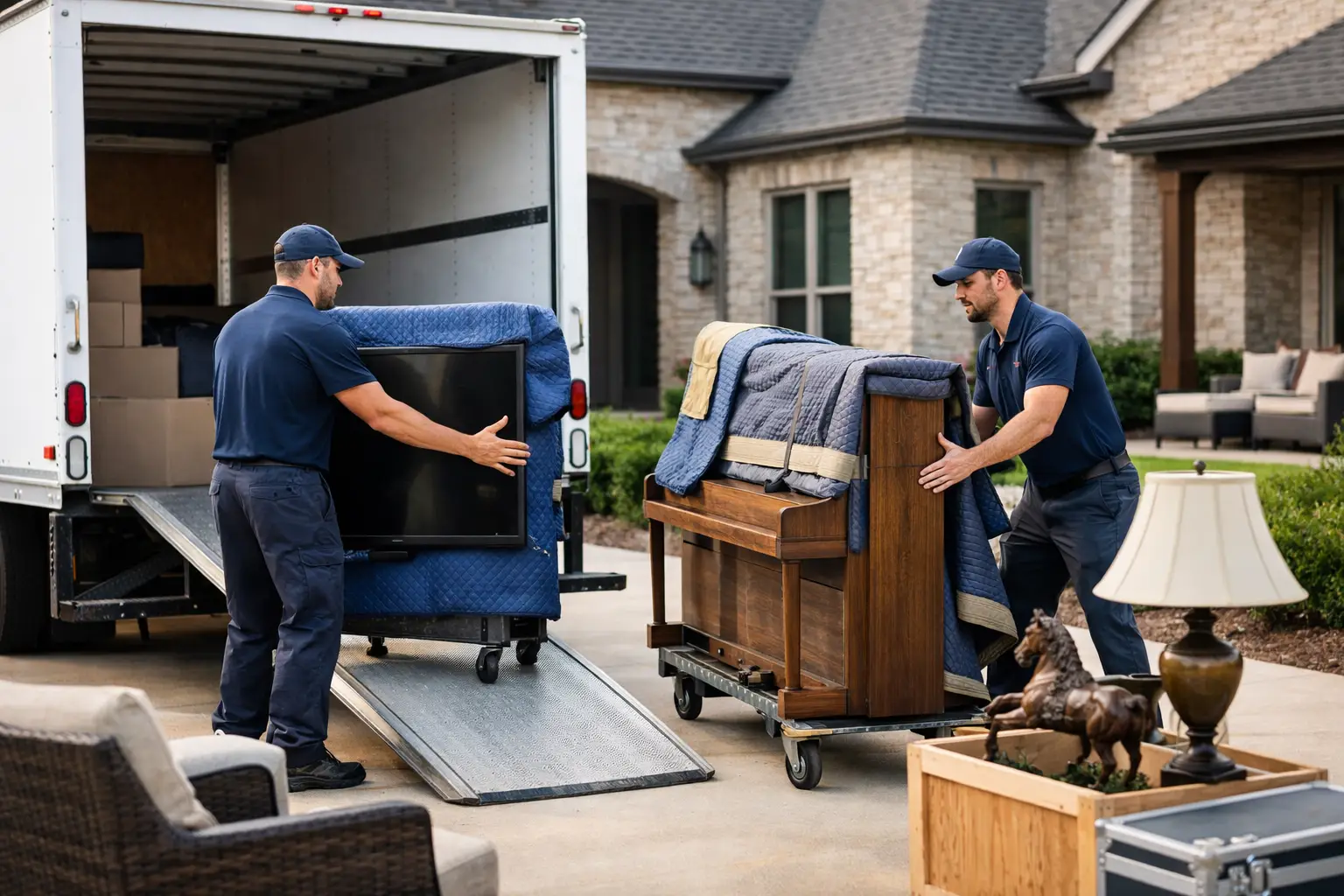
A piano is not simply heavy furniture. A gun safe can damage flooring before it reaches the front door. A pool table may look intact after a move but play poorly if it is not disassembled and releveled correctly. This specialty item moving guide helps DFW households plan for the belongings that need more than a few extra hands and a moving blanket.
Specialty moving is about controlling risk. The right crew, equipment, access plan, and insurance coverage can protect the item, your home, and everyone involved in the move. Cutting corners may seem like a way to save money, but one damaged staircase, strained back, or broken instrument can cost far more than professional handling.
What Counts as a Specialty Moving Item?
A specialty item is usually unusually heavy, delicate, valuable, awkwardly shaped, or difficult to move through a typical home or apartment. Weight matters, but it is not the only factor. A large antique mirror may weigh less than a safe, yet it needs a very different packing and handling process.
Common specialty items include pianos, organs, gun safes, pool tables, large aquariums, grandfather clocks, antiques, fine art, oversized furniture, arcade machines, exercise equipment, and commercial equipment. Some items require disassembly. Others need custom padding, crating, a lift gate, or additional movers. The correct plan depends on the item itself and the path it must travel.
A ground-floor upright piano with a clear walkway is a different job from a baby grand piano moving down a curved staircase. Likewise, a safe that can roll across a level garage floor is far less complicated than one located in an upstairs office. Accurate details make the estimate and moving plan more reliable.
Specialty Item Moving Guide: Start With an Access Plan
Before requesting a quote, look at the full route from the item’s current position to its new location. This is where many moving complications begin. Measure doorways, hallways, elevators, stair landings, gates, and tight turns. Include the destination, not just the pickup location.
Take clear photos of the item and every challenging part of the route. Photos help movers identify whether they need a furniture dolly, piano board, stair-climbing equipment, extra protection, or a larger crew. Tell the moving company about stairs, steep driveways, narrow apartment corridors, elevator reservations, loading-dock rules, and any parking restrictions.
For homes and apartments in Fort Worth and across the DFW area, access can vary widely. A historic home with narrow halls, a third-floor apartment, and a suburban house with a long sloped driveway each require a different approach. Good local movers plan for those details before moving day rather than charging ahead and hoping the item fits.
Measure More Than the Item
Knowing an item’s width and height is useful, but the clearance around it matters just as much. A piece can fit through a doorway on paper and still be impossible to turn into the hall. Measure the tightest point on the route, then account for protective padding and the space movers need to safely control the load.
Also consider the surfaces underfoot. Tile, hardwood, concrete, carpet, gravel, wet grass, and uneven pavers affect how equipment can be used. Professional crews protect floors and use the right tools for the surface instead of dragging or improvising.
Give Movers the Details That Affect Price and Safety
Specialty moving quotes should be based on real information, not guesses. Be direct about the item’s make, model, approximate dimensions, and condition. If you know the weight, share it. For pianos, identify whether it is an upright, console, studio, baby grand, or grand. For safes, provide the exterior dimensions and whether it is bolted to the floor.
The most useful details to provide are:
- The item type, dimensions, estimated weight, and photos from multiple angles
- Pickup and delivery addresses, including stairs, elevators, long carries, and tight access points
- Whether the item needs disassembly, reassembly, protection, or placement in a specific room
- Any building requirements, parking limitations, time windows, or permits
Transparent pricing starts with a complete description of the job. Specialty work may be quoted as a separate line item, included in an hourly move with added labor, or priced according to complexity. There is no single fair price for every piano or safe because access, distance, equipment, and crew size all change the work involved.
Ask what the estimate includes and what could change it. A straightforward moving company should explain potential charges before the move, such as extra stairs, a long carry, elevator delays, disassembly, or unexpected access problems. No one wants to learn about a specialty fee after the truck arrives.
Prepare the Item Without Creating New Risks
Your job before moving day is mostly preparation and communication. Avoid taking apart an item unless the manufacturer’s instructions or a qualified technician recommends it. Incorrect disassembly can damage delicate mechanisms, weaken joints, or make reassembly more difficult.
Remove loose accessories and pack them separately. For example, take music books off a piano, empty an aquarium completely, remove removable shelves from a cabinet, and secure any drawers or doors that can shift. Keep hardware in labeled bags when disassembly is required, and do not tape directly onto finished wood, leather, or delicate surfaces.
For gun safes, follow safe handling practices before movers arrive. Remove firearms and ammunition, confirm the safe is empty, and secure keys, combinations, and documents separately. Movers should not be expected to handle loaded firearms or transport items that have not been properly prepared.
For pool tables, plan on professional disassembly and reassembly. The slate is extremely heavy and can crack if handled incorrectly. Releveling at the new home matters as much as transport. A table that is moved cheaply but plays poorly afterward is not a successful move.
Pianos deserve special attention as well. Movers can protect the case, pedals, keys, and legs during transport, but tuning should generally happen after the instrument has adjusted to the new environment. Temperature and humidity changes can affect tuning, so schedule it after the piano has settled in.
Ask About Insurance and Responsibility
Insurance is not a detail to leave until moving day. Ask what coverage applies to specialty items, how claims are handled, and whether the company is fully insured. You should also ask whether there are declared-value requirements, exclusions for pre-existing damage, or special coverage options for high-value belongings.
Document the item’s condition before the move with date-stamped photos. Photograph existing scratches, chips, worn corners, and mechanical issues. This protects both you and the moving crew by creating a clear record before handling begins.
It also helps to understand the difference between moving valuation and your homeowners or renters insurance. Policies vary, especially for antiques, collectibles, fine art, and high-value instruments. If an item has significant financial or sentimental value, check your policy before the move and ask whether additional coverage is appropriate.
Know When a Specialist Is Needed
A professional moving company can safely handle many difficult items, but certain situations require an additional specialist. This is not a weakness in the moving plan. It is the right way to protect an item with unique technical requirements.
An antique clock may need a clock technician to secure its movement. A large aquarium may require aquarium service professionals to disconnect equipment and prepare livestock. Medical devices, server racks, commercial machinery, and unusually valuable art may need manufacturer guidance, specialized crating, or a dedicated transport provider.
The best approach is coordination. Your movers can handle the transportation plan while another qualified professional prepares, disconnects, calibrates, or reinstalls the item. Clarifying those roles ahead of time prevents delays and avoids damage caused by assumptions.
Choose a Crew With the Right Equipment and Communication
A specialty move should never rely on muscle alone. Ask whether the crew has the equipment and training needed for your item, including dollies, straps, padding, piano boards, floor protection, and secure truck tie-downs. For complex moves, ask how many movers will be assigned and whether the crew has handled similar items before.
Communication is equally important. You should know when the crew is expected to arrive, what access issues have been noted, and what preparation is expected from you. Great White Moving Company Fort Worth approaches specialty moves with that same practical focus: clear planning, careful handling, fully insured service, and pricing explained before the work begins.
When the item reaches its new home, inspect it before the crew leaves. Confirm it is placed where you want it, check visible surfaces, and test basic operation when appropriate. If something needs follow-up, address it promptly while the details are fresh.
The safest specialty move is rarely the fastest-looking one. Give your movers accurate information, prepare the route, ask direct questions about pricing and coverage, and choose professionals who treat difficult items as planned work rather than a last-minute challenge.
