
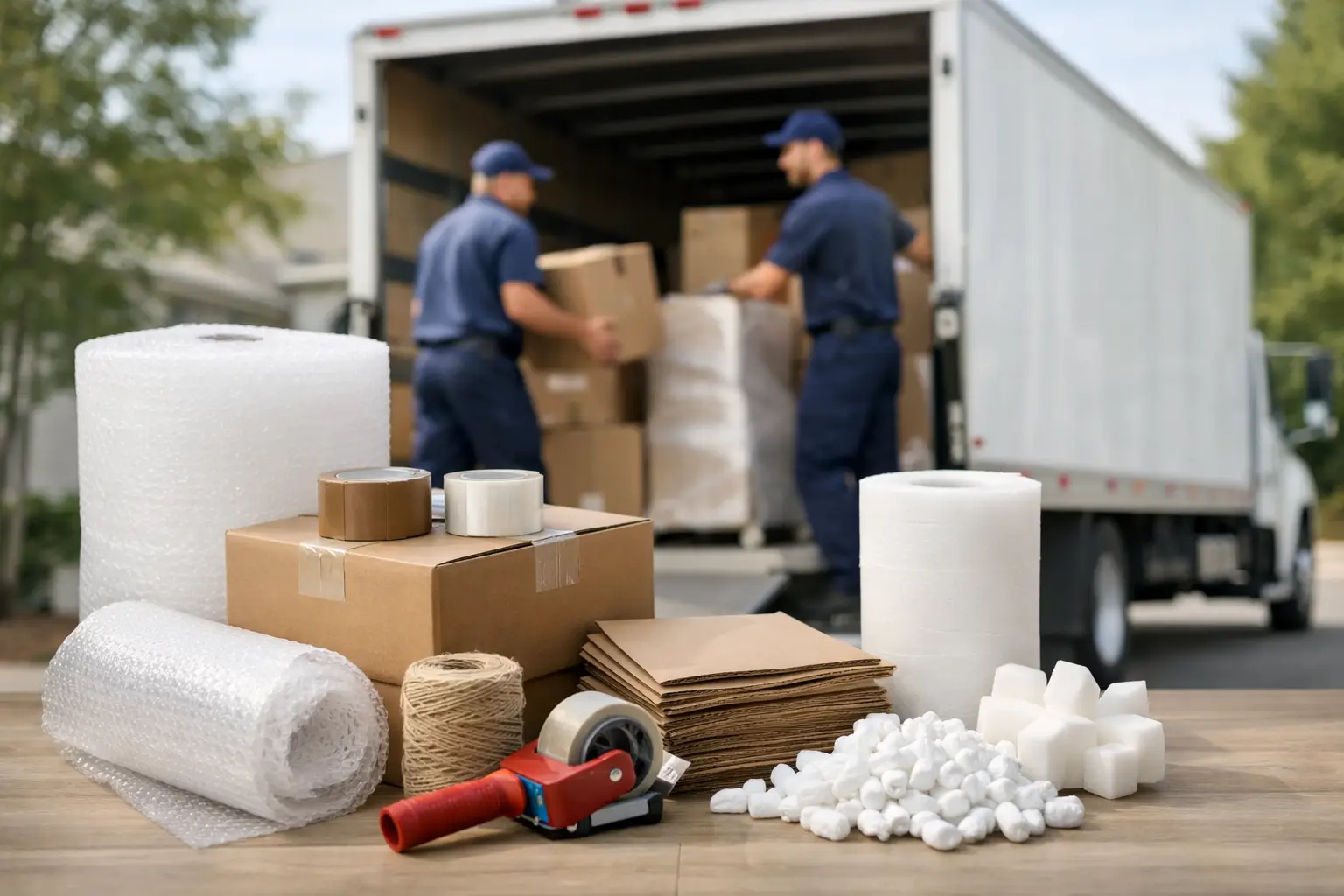
A broken plate, a scratched dresser, or a box that gives out on the stairs can turn moving day into an expensive problem. This best packing materials checklist helps you buy and use the supplies that actually protect your belongings, without filling your home with unnecessary materials or paying for products you will not use.
The right supplies depend on what you own, how far you are moving, and whether you are packing yourself or using professional packing help. A one-bedroom apartment with mostly clothing and flat-pack furniture needs a different approach than a family home with glassware, artwork, a piano, or a packed garage. Start with the essentials, then add specialty protection where the risk is higher.
Best Packing Materials Checklist: Start With the Essentials
For most residential moves, the following materials cover the items that cause the most damage when packed incorrectly:
- Small, medium, and large moving boxes
- Heavy-duty boxes for books, dishes, and other dense items
- Packing paper or unprinted newsprint
- Bubble wrap in at least one larger-bubble size
- Heavy-duty packing tape and a tape dispenser
- Permanent markers and box labels
- Stretch wrap for furniture, drawers, and bundled items
- Moving blankets or furniture pads
- Mattress bags and furniture covers
- Box cutters or safety scissors
- Zip-top bags for hardware, cords, and small parts
- A hand truck or dolly, plus moving straps for heavy items
Do not treat every box the same. Standard boxes are useful for lightweight household goods, but books, canned food, tools, records, and dishes need smaller heavy-duty boxes. A large box packed with heavy items may be difficult to lift safely and more likely to split at the bottom.
Buy more tape than you think you need. A properly sealed box should have tape across the center seam and along both edges in an H pattern. Weak tape, masking tape, and duct tape are not reliable substitutes for quality packing tape. They can lose adhesion in heat, humidity, or a long truck ride.
Choose Boxes Based on Weight, Not Just Room
Packing room by room helps with unpacking, but box selection should be based on weight and fragility. Small boxes are for dense, heavy items. Medium boxes work well for kitchenware, toys, small appliances, and folded clothing. Large boxes are best for pillows, bedding, lampshades, and other light but bulky belongings.
Wardrobe boxes can save time for hanging clothes, especially when a move is happening between workdays. They are also useful for coats, dresses, and items that wrinkle easily. However, they cost more than standard cartons and take up more space in the truck, so they may not be necessary for every closet.
Dish-pack boxes are worth the added protection if you are moving a large collection of dishes, glassware, or ceramics. Their double-wall construction is designed for heavier, breakable loads. If you use standard boxes for dishes, keep each box smaller, line the bottom with crumpled paper, and avoid stacking too much weight.
How Many Boxes Do You Need?
There is no single box count that fits every household. The amount depends on how long you have lived in the home, how much storage you use, and whether you are moving a garage, home office, or children’s rooms. As a practical rule, gather supplies early and reassess after packing one or two rooms. People usually underestimate closets, kitchen cabinets, and garages.
It is better to have a small reserve of boxes and return unused unopened bundles when possible than to run out late at night before a scheduled move. If you are in the Fort Worth area and unsure what your home requires, a moving company can often help estimate supplies based on the size and contents of your move.
Protect Fragile Items With Layered Packing
Fragile items need separation, cushioning, and a box that can handle the weight. Bubble wrap is useful, but it should not be the only material you rely on. Packing paper fills gaps, cushions the bottom and top of boxes, and keeps individual items from touching.
Wrap plates one at a time in packing paper, then place them vertically in a sturdy box rather than stacking them flat. Vertical packing distributes pressure more safely, much like records stored in a crate. Put a layer of crumpled paper at the bottom, fill open spaces between items, and add more paper before closing the box. The goal is a box that feels full without being overloaded.
For glasses and stemware, wrap each piece separately and pay extra attention to handles, stems, and rims. Cardboard cell kits can help organize glasses, but they are not a replacement for wrapping and padding. Label fragile boxes clearly, but remember that a label alone will not protect an underpacked box.
Picture frames, mirrors, and artwork require corner protectors, bubble wrap, and a flat picture box when available. Avoid packing framed pieces in a box with loose objects that can shift and strike the glass. Valuable artwork, antiques, and sentimental heirlooms may need specialty packing or professional handling instead of a standard do-it-yourself approach.
Use Furniture Protection That Prevents Scratches and Moisture
Moving blankets are among the most useful materials on this checklist because they protect wood, upholstered furniture, metal frames, and large electronics from rubbing against other items in the truck. Place pads over clean, dry furniture, then secure them with stretch wrap or moving bands. Do not apply packing tape directly to finished wood, leather, painted surfaces, or upholstery. It can leave residue or pull up the finish.
Stretch wrap is especially helpful for keeping dresser drawers shut, bundling bed rails, and protecting upholstered furniture after it has been covered with a moving blanket. It is not ideal as the only layer around wood furniture because plastic can trap moisture. If furniture has been stored in a garage or moved during wet weather, let it dry before wrapping it tightly.
Mattress bags keep mattresses clean during loading and transport. Use the correct size, and tape only the plastic bag rather than the mattress itself. For sofas, chairs, and fabric headboards, a breathable furniture cover may be a better choice when the item will be stored for more than a short period.
Electronics, Cords, and Small Hardware
Original boxes are the best option for televisions, computers, gaming systems, and monitors because they are shaped for the item and include fitted foam. If you no longer have them, use a properly sized box with foam corners, bubble wrap, and no empty space around the device. Never lay a television flat unless the manufacturer specifically permits it.
Take photos of cable connections before unplugging equipment. Place cords, remotes, screws, and mounting hardware in labeled zip-top bags, then tape the bag to the item or place it in a clearly marked essentials box. Hardware for beds, desks, and shelving can disappear quickly during a move, and replacing it is often harder than expected.
Materials to Avoid or Use Carefully
Free grocery boxes may look like a money-saving option, but they can carry odors, pests, moisture damage, or weakened seams. Used boxes from a clean source can work for lightweight items, but inspect every box before filling it. Avoid boxes with soft corners, stains, tears, or crushed bottoms.
Trash bags are fine for soft linens, towels, and pillows, but they are a poor choice for most belongings. They tear easily, hide what is inside, and can be mistaken for actual trash. They also offer little protection for anything with corners, edges, or weight.
Newspaper can work as filler in a pinch, but the ink may transfer to dishes, clothing, and light-colored surfaces. Unprinted packing paper is cleaner and easier to use. Towels, T-shirts, and blankets can reduce packing paper use, but use them for low-risk cushioning rather than as the only protection for delicate glass or collectibles.
Pack an Essentials Box Before You Finish the House
Set aside one clearly labeled box or tote that travels with you rather than in the moving truck. Include medications, chargers, important documents, keys, basic tools, toilet paper, snacks, pet supplies, and a change of clothes. Families may also want easy-to-reach items for children, such as favorite toys, school materials, or bedtime necessities.
This is one area where convenience matters as much as protection. Even a well-organized move becomes frustrating if you have to open ten boxes to find a phone charger, screwdriver, or prescription medication after arrival.
For large furniture, fragile collections, pianos, gun safes, pool tables, or other high-value items, the safest material is often professional-grade equipment handled by trained movers. Great White Moving Company Fort Worth can provide packing support and careful specialty-item transportation when the risk is too high for standard household supplies.
A well-packed move is not about using the most materials. It is about using the right protection in the right places, labeling clearly, and refusing to rush the boxes that hold what matters most.
