
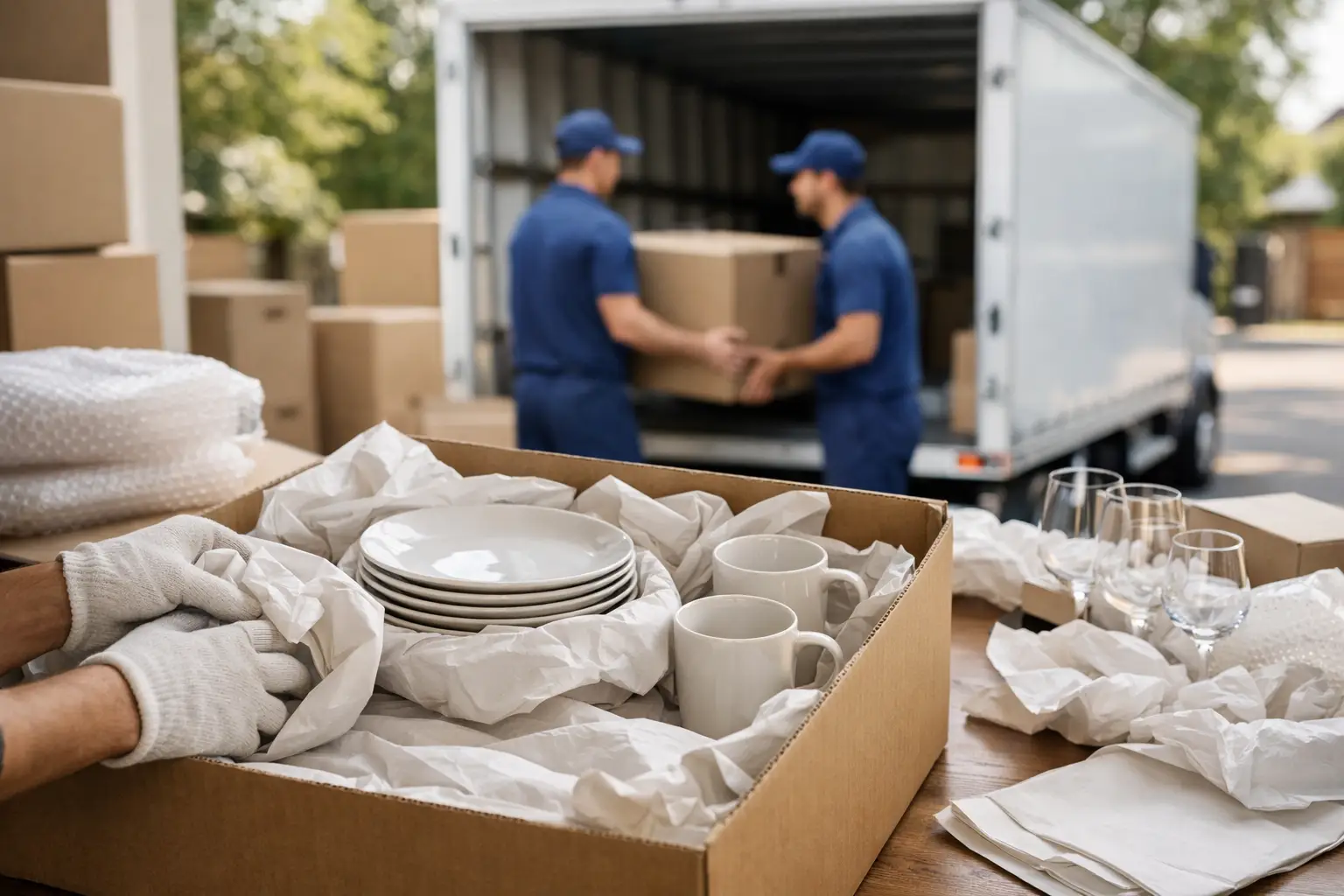
A box of dishes can look harmless until you open it at the new place and hear that unmistakable clink of broken ceramic. The best ways to pack dishes come down to two things – protecting each piece from impact and keeping the box stable enough that nothing shifts during the move.
That sounds simple, but dish packing goes wrong in a few predictable ways. People use boxes that are too large, stack plates flat, skip padding at the bottom, or make the box so heavy it gets dropped. If you want fewer surprises on moving day, the goal is not just wrapping each item. It is building a box that can handle being lifted, carried, and loaded without the contents knocking into each other.
Best ways to pack dishes before you tape a box
Start by sorting what you actually plan to move. If a plate is already chipped or you have mismatched cups you never use, moving is a good time to let them go. Every fragile item you keep adds packing time, weight, and risk.
Next, gather the right materials. Dish packing is one area where using the proper supplies really matters. A sturdy small moving box is usually better than a large one because dishes get heavy fast. You will also want packing paper, bubble wrap for extra-fragile pieces, strong tape, and a marker for labeling. Cell kits can help for glasses and stemware, but for standard plates and bowls, careful paper wrapping usually does more than fancy inserts.
If you are short on supplies, avoid using towels or clothing as your main protection for breakables. They can help fill open space, but they do not wrap tightly enough to stop movement inside the box. Newspaper is also not ideal for direct contact with dishes because the ink can transfer.
Before anything goes into the box, tape the bottom seams well and add a thick cushion layer. Crumpled packing paper on the bottom helps absorb shock. Think of it as building suspension for the box. If the box gets set down harder than expected, that bottom padding takes the hit first.
How to wrap plates, bowls, and cups the right way
The safest method for most plates is to wrap them one at a time in packing paper, then bundle a few similar plates together with another layer around the group. The key is firm wrapping without forcing pressure on the edges. Loose paper lets items slide. Overly tight wrapping can put stress on thinner ceramics.
Plates should be packed vertically, like records on a shelf, not stacked flat. This surprises a lot of people, but vertical packing spreads pressure better and lowers the chance of cracking under weight. Flat stacks put direct force on the center plate and can turn one rough bump into a chain reaction.
Bowls can also be wrapped individually and nested if they are the same size, but do not force them tightly into each other. Add paper between each one, then wrap the grouped stack again. Mixing large and small bowls in one nest can create pressure points, especially if the shapes do not match.
For mugs and cups, pay extra attention to the handles. Handles are usually the first part to break. Wrap the entire mug in paper, then add a little extra padding around the handle area before placing it in the box. Cups and mugs should sit upright, with paper filling any gaps around them.
Glasses need a little more care because thin rims and stems are vulnerable. Stuff a small amount of paper inside each glass first to support it, then wrap it fully. Stemware should be wrapped individually with extra padding around the stem and base. If you are packing high-value glassware, this is one of those cases where using more material is worth it.
The best ways to pack dishes in the box
Once everything is wrapped, load the box with the heaviest and sturdiest items first. Dinner plates and heavier bowls should go at the bottom, packed vertically and tightly enough that they cannot tip over. Lighter items such as salad plates, cups, or serving pieces can go higher up.
Fill every gap with crumpled packing paper. Empty space is the enemy. Even a well-wrapped dish can break if it has room to build momentum inside the box. At the same time, do not jam items in so tightly that the box bulges or the sides bow out.
Keep the box weight reasonable. A common mistake is trying to fit the entire kitchen into two or three boxes. Dishes are dense, and overly heavy boxes are more likely to be dropped or split at the bottom. Smaller boxes are easier to control and safer for both the contents and the person carrying them.
Add another thick layer of paper on top before sealing the box. After you tape it shut, gently test for movement. You should not hear dishes shifting around. If you do, reopen it and add more fill.
Label the box clearly on multiple sides. “Fragile” helps, but it is even better to write “Dishes” and “This Side Up” if the orientation matters. Clear labels give movers or helpers a better chance to handle the box correctly.
Items that need special handling
Not every kitchen item should be packed the same way. Fine china, crystal, oversized platters, and serving bowls need more protection than everyday dishes. These pieces often have thinner material, unusual shapes, or sentimental value that makes breakage more costly than replacing a standard plate set.
For fine china, wrap each piece individually in packing paper, then add bubble wrap as a second layer. Avoid letting decorative surfaces rub against each other. If the item has a lid, such as a tureen or ceramic serving dish, wrap the lid separately. Packing it attached is asking for trouble.
Large platters and trays should be wrapped well and packed vertically when possible. If the shape makes that awkward, place them flat only if there is no heavy weight on top and plenty of padding below and above. The right method depends on the thickness and strength of the item.
Cookware is less fragile, but it can still damage dishes if packed together. Pots, pans, and lids should usually go in separate boxes from breakables. A heavy pan sliding into a box of plates can undo all your careful packing in one trip from the kitchen to the truck.
Common dish-packing mistakes that cause breaks
Most broken dishes are not the result of one dramatic accident. They usually come from small mistakes that add up. Using oversized boxes is a big one. Large boxes invite overpacking, and once a dish box is too heavy, every lift becomes riskier.
Another mistake is rushing the wrap job. Wrapping five plates together without paper between them saves time up front but often leads to edge chips and cracks. The same goes for forgetting to cushion the bottom and top of the box.
People also underestimate movement in the truck. Even on a local move, boxes shift with turns, stops, and loading pressure. That is why tight packing and gap filling matter just as much as the wrapping itself.
Finally, there is the issue of mixing fragile and heavy items. A box with dishes, canned goods, and kitchen tools might seem efficient, but it is harder to balance and much more likely to cause internal damage.
When professional packing makes sense
If you only have a few dish sets and some basic glassware, packing them yourself is realistic with the right materials and enough time. But there are situations where professional packing is the safer call. If you have fine china, antiques, a large kitchen, or a tight moving schedule, it may be worth having trained movers handle the breakables.
That is especially true when the move already includes other high-risk items or a lot of coordination. In busy households, dish packing often gets pushed to the last minute, and that is when shortcuts happen. A professional crew brings the supplies, uses proven methods, and packs with transport in mind, not just storage.
For families moving across Fort Worth or anywhere in the DFW area, that extra layer of care can mean fewer damaged items and less stress on moving day. Great White Moving Company Fort Worth sees this firsthand – when fragile kitchen items are packed correctly from the start, the whole move tends to go more smoothly.
A smarter way to think about packing dishes
The best dish packing is not about wrapping everything in as much material as possible. It is about using the right box, the right orientation, and the right amount of support so each item stays protected without shifting. That balance matters more than any single packing hack.
If you are staring at your kitchen and wondering where to start, begin with one cabinet, pack the heaviest basics first, and do not rush the fragile pieces. A little extra time at the box usually saves a lot of frustration when you unpack.
