
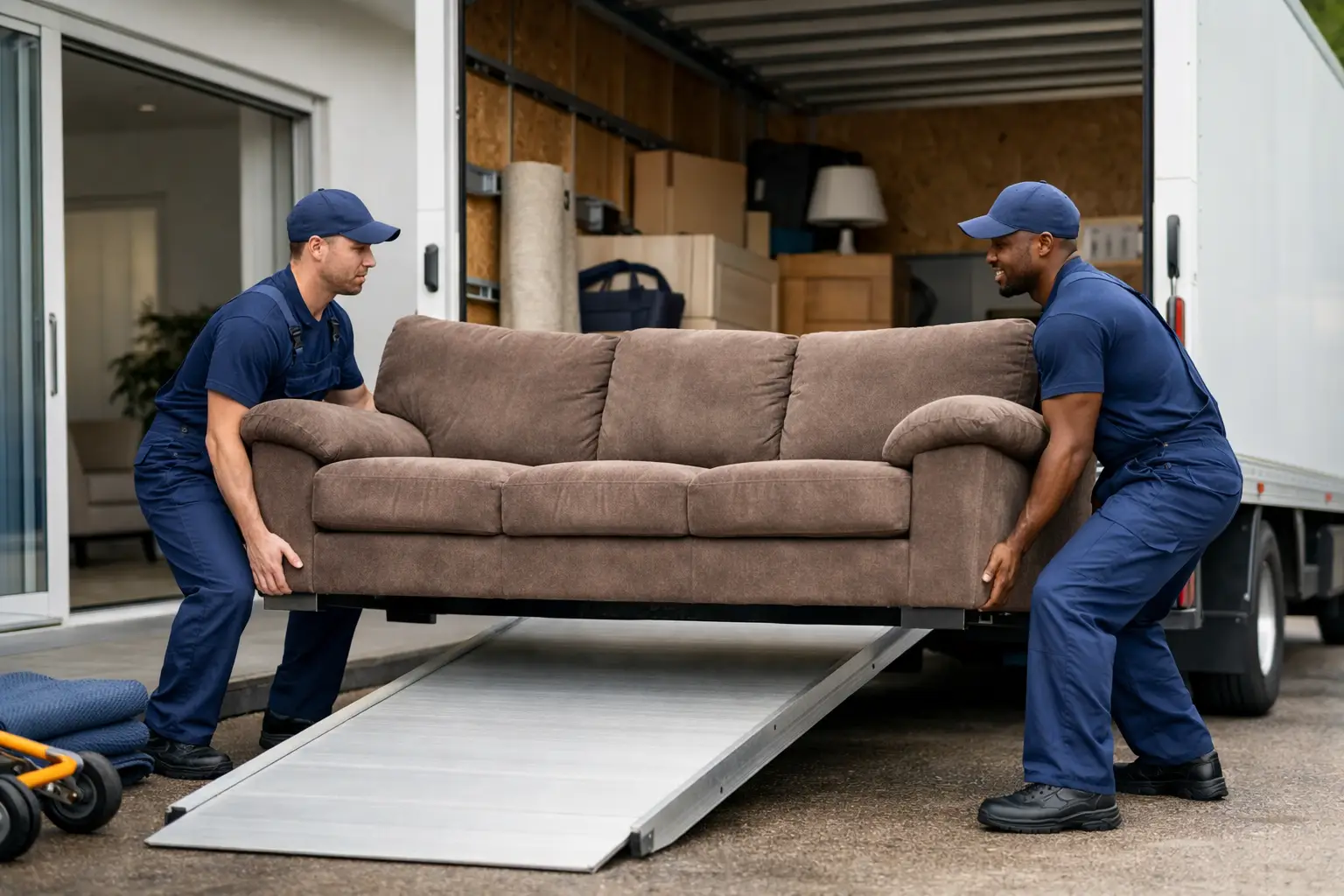
That dresser always looks manageable until it has to clear a doorway, miss a light fixture, and make it down a staircase without gouging the wall. If you are figuring out how to move heavy furniture, the real job is not just strength. It is planning, protection, and knowing where the risks are before something gets damaged or someone gets hurt.
Heavy furniture moves go wrong for predictable reasons. People rush, lift with a bad grip, underestimate weight, or try to save time by skipping equipment. A sofa can twist awkwardly in a tight apartment hallway. A solid wood dining table can become top-heavy once it is tilted. A gun safe or piano is in a different category altogether and should never be treated like a standard household move.
How to move heavy furniture without damage
Start by looking at the piece itself. Is it solid wood, particle board, glass-topped, antique, or oversized? A heavy item is not always durable. Some furniture can handle a lift from the base, while other pieces can crack if weight shifts to the wrong point. Dressers, desks, and entertainment centers often seem sturdy but become unstable if drawers are left inside.
Before you touch anything, measure the furniture and the route. Check doorways, stairwells, elevator clearances, corners, and ceiling height. Remove rugs, shoes, decor, and floor lamps from the path. In homes around Fort Worth and the wider DFW area, tight entries, second-floor apartments, and sharp staircase turns are common trouble spots. A five-minute walkthrough can prevent an hour of repositioning.
Then reduce the load. Empty drawers, cabinets, and shelves. Remove detachable legs, shelves, mirrors, bed frames, and cushions when possible. Wrap loose hardware in a labeled bag and tape it to the furniture or place it in a clearly marked box. The lighter and less awkward the piece is, the safer the move becomes.
Use the right equipment, not just muscle
The safest way to move heavy furniture is with proper moving equipment. Furniture sliders are useful on hardwood, tile, and sometimes low-pile carpet. A four-wheel dolly helps with boxed items and square furniture that can sit flat and balanced. An appliance dolly with straps gives better control for taller, heavier items. Moving blankets protect corners, wood finishes, and walls.
Lifting straps can also help, but only if the people using them understand how to balance the load. They reduce strain when used correctly, but they are not a shortcut for poor coordination. If one person moves too fast or takes a step at the wrong angle, the furniture can shift hard and suddenly.
For floor protection, use sliders rather than dragging furniture directly. Dragging may seem easier, but it can scratch hardwood, tear vinyl, catch on thresholds, and loosen furniture joints. On carpet, sliders can help with some pieces, but deep-pile carpet often adds resistance. In that case, a dolly may be the better option.
Lift with control, not speed
When lifting is necessary, keep the piece close to your body and lift with your legs, not your back. That advice gets repeated because it matters. Bend at the knees, tighten your core, and avoid twisting while carrying weight. If you need to turn, move your feet instead of rotating your torso.
Communication matters just as much as technique. One person should call the moves, especially in narrow spaces or on stairs. Simple cues like stop, tilt, lower, and pivot keep everyone synchronized. Most accidents happen when one mover assumes and the other reacts late.
It also helps to know when not to carry an item fully off the ground. Many pieces can be tilted and guided onto a dolly or set onto sliders with less effort and less risk. If a piece feels unstable during the first lift, set it down and reassess. That pause can save your back and your furniture.
Stairs, corners, and doorways are where problems start
Flat, open rooms are the easy part. Tight transitions are where heavy furniture becomes difficult. For corners, stand the piece upright only if the construction allows it. Some bookcases and dressers should not be turned on end because the frame can rack under pressure. Sofas usually have more flexibility, but legs may need to come off first.
On stairs, the person at the lower end carries more weight. That is why stair moves require a realistic assessment of size, balance, and grip. If the item blocks visibility or forces the lower mover into an awkward position, stop. The move is no longer safe. This is especially true for solid wood armoires, sleeper sofas, and large appliances.
Doorways create another common mistake. People often try to force a piece through at the wrong angle, which damages trim, walls, or upholstery. Try changing the orientation first. Remove the door from its hinges if you need a little extra clearance. That small step is often easier than fighting the frame.
Know which items need professional movers
Some furniture is heavy. Some is heavy and specialized. There is a major difference.
Pianos, gun safes, pool tables, marble tops, large executive desks, and antique cabinets should not be handled as ordinary DIY moves. These items can be extremely dense, top-heavy, fragile, or all three at once. They often require specialized dollies, padding, stair protection, and trained handling techniques. The cost of getting it wrong is usually far higher than the cost of hiring help.
There is also the insurance question. If you damage your own furniture during a DIY move, you absorb that loss. If a friend gets injured helping, the situation can become even more serious. For high-value pieces, multi-story moves, or anything involving tight staircases, working with a fully insured moving company is often the safer and more cost-effective decision.
Great White Moving Company Fort Worth regularly sees customers call after a DIY attempt has stalled at the hardest point of the move. That is common, and it makes sense. The first room feels simple. The stairs, corners, and loading phase are what change the equation.
Protect your home while you move
Furniture is only half the concern. Floors, walls, railings, and door frames take a beating during rushed moves. Use moving blankets on sharp corners and wrap furniture before it leaves the room, not after it reaches the truck. Corner guards and painter’s tape on vulnerable trim can help in tight spaces.
If you are moving during a Texas summer, plan for heat and fatigue as well. Grip strength drops when people are overheated, and judgment gets worse when everyone wants to finish fast. Move heavy items early in the day, take water breaks, and do not keep pushing after the team gets tired. A rushed final lift is often the one that causes damage.
Loading the truck also matters. Heavy furniture should be placed strategically to avoid shifting in transit. That usually means against the wall of the truck, secured properly, with weight distributed evenly. Stacking lighter items on unstable furniture is a mistake. So is placing heavy pieces where they can slide into delicate boxes or appliances during a turn.
When DIY makes sense and when it does not
If you are moving one sturdy item across a single level with good equipment and enough help, doing it yourself may be reasonable. The same goes for basic furniture that can be disassembled easily and carried through wide, open spaces.
But if the move involves stairs, expensive items, narrow hallways, or furniture that cannot be safely disassembled, DIY becomes less attractive. The money saved upfront can disappear quickly if you crack a table base, damage a wall, or end up needing last-minute help after losing half a day.
The best approach is to be honest about the job. Not every heavy piece requires a professional crew, but many do. When the item is awkward, valuable, or dangerous to handle, experience matters more than effort.
A careful move is always cheaper than a damaged one. Take the time to plan the route, use the right equipment, and stop when the risk starts to outweigh the savings. Heavy furniture can be moved safely, but only when the method matches the weight, the space, and the stakes.
