
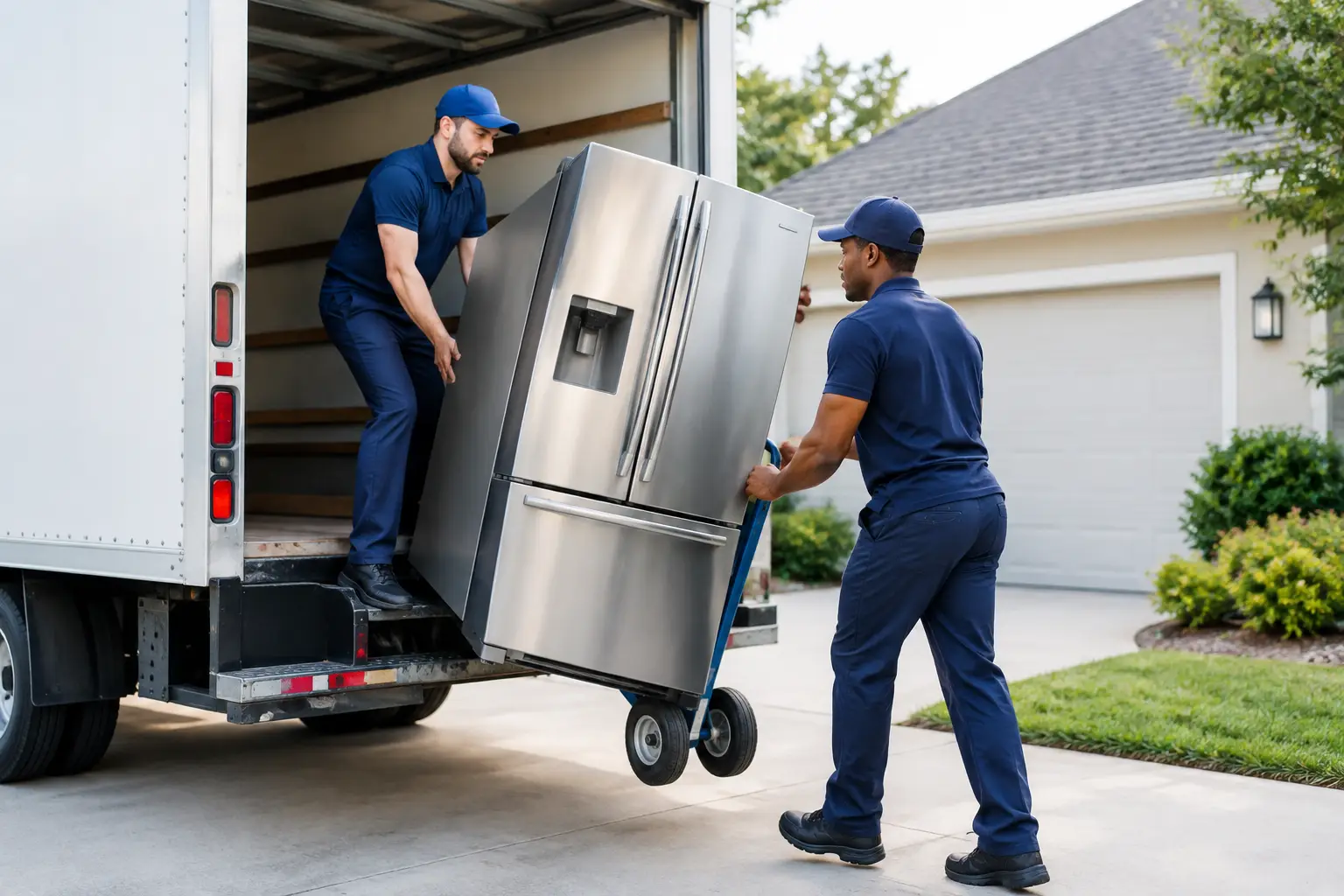
A refrigerator that is still cold, a washer with water in the line, or a gas range that has not been disconnected can delay an otherwise well-planned move. So, can movers move appliances? In most cases, yes. Professional movers can transport many household appliances, but the appliance must be properly prepared, disconnected, and safe to move before the crew arrives.
The details matter. A standard refrigerator is very different from a built-in oven, a washer-dryer set, or a gas appliance. Knowing what movers can handle and what you need to arrange ahead of time protects your home, your appliances, and your moving budget.
Can Movers Move Appliances Safely?
Movers commonly transport freestanding appliances such as refrigerators, freezers, washers, dryers, dishwashers, ranges, and microwaves. A trained crew uses appliance dollies, moving blankets, straps, floor protection, and the right lifting techniques to move heavy items through hallways, doorways, stairs, and tight apartment layouts.
That does not mean every appliance is automatically ready to load. Movers are transportation professionals, not licensed plumbers, electricians, or gas technicians. They generally cannot disconnect or reconnect water lines, gas lines, hardwired electrical connections, vents, or built-in cabinetry. Those tasks may require a qualified professional, especially when gas or electrical work is involved.
For a straightforward move, the best approach is simple: have the appliance disconnected, drained, cleaned, and accessible before moving day. Then your movers can focus on carefully getting it from Point A to Point B.
Appliances Movers Can Usually Transport
Most freestanding appliances can be moved when they are prepared correctly. This includes refrigerators, chest freezers, upright freezers, washers, dryers, electric ranges, and standalone dishwashers.
A refrigerator is one of the most common requests. Before it is moved, empty all food and ice, unplug it, and allow it to defrost completely. Water from a melting ice maker can damage floors, boxes, and other belongings in the truck. Remove loose shelves and drawers when possible, or secure them so they do not shift during transport.
Washers need special attention because water can remain inside the machine even after the supply lines are removed. Turn off the water, disconnect the hoses, drain the remaining water, and secure the drum according to the manufacturer’s instructions. If you still have the original shipping bolts, use them. They help prevent internal damage while the washer is in transit.
Dryers are usually easier to prepare, but gas dryers require a licensed professional to disconnect the gas supply. Electric dryers should be unplugged, and the vent hose should be detached and packed separately. Clean out lint before the move to avoid bringing a fire hazard into your new home.
What Movers May Not Be Able to Move
Some appliances require more planning, extra equipment, or separate service arrangements. Built-in refrigerators, wall ovens, cooktops, vent hoods, and dishwashers installed under a counter may be secured to cabinetry, plumbing, or electrical connections. A moving crew may be able to transport the appliance after it has been professionally removed, but removal itself is not always part of a standard moving service.
Gas ranges, gas dryers, and other gas-powered appliances should be disconnected by a licensed technician. Even a small issue with a gas connection can create a serious safety risk. Do not ask a mover, friend, or family member to improvise this step just to save time.
Oversized appliances can also present access challenges. A large side-by-side refrigerator may not fit through every doorway, and an appliance located upstairs may require careful planning. The crew may need to remove doors, use protective coverings, or determine whether the item can safely navigate stairs and turns. Share this information when requesting your estimate so there are no surprises on moving day.
Prepare Appliances Before the Movers Arrive
Proper preparation keeps your move on schedule and helps prevent avoidable damage. Start at least a day or two before the move, not an hour before the truck arrives.
For most appliances, the goal is to disconnect utilities, remove moisture, secure movable parts, and make the item easy to access. Keep appliance manuals, hoses, power cords, and small installation parts together in a labeled bag. Tape that bag to the appliance or pack it in a clearly marked box so it does not disappear among your kitchen and laundry items.
Here are the key preparation steps for common appliances:
- Refrigerators and freezers: Empty, unplug, defrost, drain, clean, and secure doors and interior shelves.
- Washers: Shut off water, disconnect hoses, drain the unit, and install shipping bolts if available.
- Dryers: Unplug electric models, have gas models professionally disconnected, and remove the vent hose.
- Dishwashers: Have plumbing and electrical connections removed, drain any remaining water, and secure racks and doors.
- Ranges and ovens: Have gas lines professionally disconnected, remove loose racks, and secure doors.
Avoid wrapping an appliance tightly in plastic while it is still damp. Trapped moisture can cause odors or mildew. Movers can use moving blankets and stretch wrap during loading, but the appliance should be dry first.
Keep Appliances Upright When Possible
Refrigerators, freezers, and some other appliances are designed to travel upright. Keeping them vertical helps protect compressors, fluids, and internal components. A professional crew will make every reasonable effort to transport these items in the safest position based on the truck layout and available space.
Sometimes an appliance must be tilted or briefly laid down to get through a doorway or into a truck. This does not always mean it is damaged, but it can affect when you should turn it back on. If a refrigerator was transported on its side, ask the manufacturer or appliance professional how long it should sit upright before being plugged in. Many models need time for compressor oil and refrigerant to settle.
Do not plug in a refrigerator immediately just because it has reached the new house. Waiting can prevent costly compressor problems.
Tell Your Moving Company About Appliances Early
Heavy appliances affect labor, equipment, truck space, and the time needed for your move. Let your moving company know about every appliance you plan to take when you request a quote. Include the make and approximate size if an item is unusually large, and mention stairs, elevators, narrow hallways, long carries, or difficult parking.
This information helps the company provide a more accurate estimate and send a crew prepared with the right equipment. It also gives you a chance to ask about pricing, preparation requirements, and any items that need specialized handling. Transparent communication before moving day is one of the easiest ways to avoid unexpected charges or last-minute delays.
For Dallas-Fort Worth households moving from an apartment, townhome, or older home with tight access, a walkthrough or detailed conversation can be especially helpful. Great White Moving Company Fort Worth can help customers plan for heavy household items, clarify what should be ready before the crew arrives, and provide a clear moving estimate.
Consider Whether Moving the Appliance Makes Financial Sense
Not every appliance is worth moving. An older refrigerator, washer, or dryer may be heavy to transport and close to the end of its useful life. If it needs repairs, does not fit your new home, or costs more to move than replace, selling, donating, or recycling it may be the better choice.
On the other hand, newer appliances, high-end models, and units that fit your new space well are usually worth taking. Compare the appliance’s condition and replacement cost against the cost of moving it. Also measure doorways, laundry closets, kitchen openings, and stairwells at the new home before you commit.
A few measurements can save you from arriving with a refrigerator that cannot enter the kitchen or a washer that does not fit the laundry room.
Protect Your Home During Appliance Moving
Appliances can scratch hardwood, crack tile, dent walls, and damage door frames if they are moved without the right equipment. Professional movers use padding, straps, dollies, and floor protection to reduce those risks, but clear pathways make a major difference.
Remove rugs, boxes, pet bowls, and other trip hazards from the route. Keep children and pets away from the work area, and make sure there is a clear place to set the appliance at both locations. If you are moving from or into an apartment, reserve the elevator and loading area in advance when required.
Appliance moving is manageable when the work is divided correctly: qualified technicians handle disconnection and installation, while trained movers handle the lifting, protection, and transportation. A little preparation before the truck arrives turns one of the heaviest parts of a move into a much more predictable one.
