
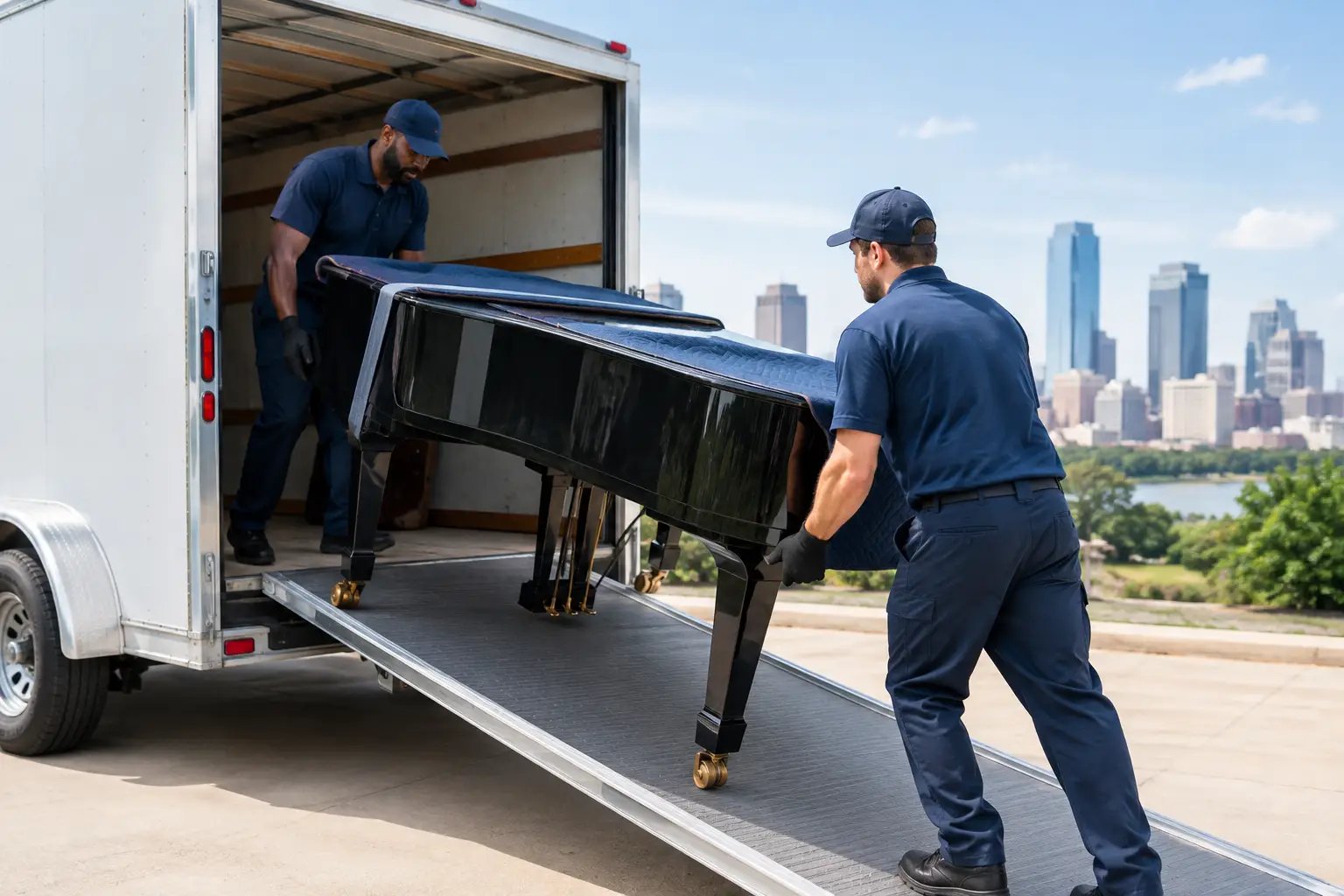
A piano is not just another heavy piece of furniture. Its weight is concentrated in a compact frame, its finish can scratch easily, and its internal parts can be affected by a rough move. So, can movers move pianos? Yes, but the job should be handled by trained movers with the right equipment, a clear plan, and insurance coverage that protects your property.
For Fort Worth and DFW households, the right moving crew can relocate many upright and grand pianos safely. The key is confirming the piano’s type, access conditions, and destination before moving day. A professional team does not simply put a piano on a dolly and hope for the best.
Can Movers Move Pianos of Every Type?
Most professional movers can handle standard upright pianos when the home’s entry points and stairs allow for safe access. These instruments commonly weigh between 300 and 800 pounds, depending on their size, age, and construction. Their weight, however, is only part of the challenge. An upright piano is top-heavy and can shift if it is not secured properly.
Baby grand and grand pianos require more planning. Movers typically protect the finish, remove or secure removable parts, use a piano board or skid board, and carefully position the instrument for transport. The legs and pedal assembly are particularly vulnerable. A grand piano should never be dragged, turned sharply on its legs, or handled by an unprepared crew.
Some situations need an onsite assessment before a move can be confirmed. Narrow staircases, steep driveways, tight apartment hallways, sharp landings, low overhead clearances, and balcony access can all change the equipment and labor required. In rare cases, a specialty lift or other outside service may be needed. Being upfront about access helps prevent delays and unexpected costs.
Why Piano Moving Requires More Than Muscle
A few strong people may be able to lift a piano, but strength alone does not make a move safe. Pianos have uneven weight distribution. In an upright, the cast-iron plate and internal structure place much of the weight toward the back. In a grand piano, the body, plate, and soundboard create a large, awkward load that must be supported correctly.
Professional piano movers use equipment designed for heavy, delicate items. This can include padded moving blankets, heavy-duty straps, piano dollies, floor protection, ramps, lifting tools, and secure truck tie-downs. The purpose is not only to move the piano from one address to another. It is to protect the instrument, your walls and floors, and the people doing the work.
A poorly planned move can lead to cracked trim, damaged hardwood, dented walls, broken piano legs, or serious injuries. It can also create a problem that is not obvious until later, such as stress on the piano’s cabinet or internal action. Paying for qualified help is often far less costly than repairing an instrument or a home after an accident.
What Movers Need to Know Before Moving Your Piano
Accurate information leads to an accurate quote and a safer moving plan. When requesting service, be ready to describe the piano and both locations. Photos can be especially helpful when there are stairs, tight turns, or unusual entrances.
A moving company will generally need to know the piano type, approximate dimensions, and whether it is an upright, baby grand, or grand. They should also know whether there are steps at either address, how many flights are involved, the width of hallways and doorways, and whether there is a long carry from the truck to the home.
Do not forget about the route outside. A gated community, limited parking, a steep driveway, muddy ground, or a long apartment walkway can affect the work involved. In the DFW area, summer heat and sudden rain can also matter. A prepared crew will protect the piano from weather exposure and plan the loading process around safe conditions.
It is also worth mentioning if the piano is an heirloom, has a high-value finish, or has existing damage. Clear documentation before the move protects everyone. It allows the movers to use the appropriate handling approach and gives you a record of the piano’s condition.
How to Prepare a Piano for Moving Day
Your movers should handle the wrapping, lifting, and securing. Still, a little preparation can make the appointment smoother. Remove personal items from the top of the piano and clear the path from the instrument to the exit. Rugs, décor, low furniture, pet bowls, and loose cords can become trip hazards during a heavy-item move.
If the piano has a lockable keyboard cover, secure it if the manufacturer’s design allows. Avoid taping directly to the wood finish. Do not attempt to remove legs, pedals, or panels unless a qualified technician or your moving company instructs you to do so. Improper disassembly can cause damage or make the instrument less stable.
Make sure children and pets are away from the moving path. This is especially important when the crew is navigating stairs or loading the piano onto a truck. A clear route gives movers room to communicate, adjust their grip, and protect your home without interruption.
After the piano arrives, allow it to adjust to the temperature and humidity of its new room before scheduling tuning. Moving does not usually damage a properly handled piano, but changes in climate and position can affect tuning. Many piano technicians recommend waiting a few weeks before having it tuned, particularly after a long-distance move or a major seasonal change.
What Affects the Cost of Piano Moving?
Piano moving prices depend on the job, not just the instrument. A ground-floor upright moving across town is very different from a grand piano that must come down a curved staircase or travel to another city. Transparent pricing starts with a detailed description of the work.
The biggest factors are the piano’s size and weight, the number of stairs, distance from the truck, access limitations, travel distance, and whether specialty equipment is required. Packing, storage, and moving other household items at the same time can also affect the estimate.
Be cautious with vague quotes that do not account for stairs or access conditions. A trustworthy mover should explain what is included, identify foreseeable extra labor, and answer questions about how pricing changes if site conditions differ from the original description. Itemized and hourly options can both make sense, depending on the scope of the move. What matters is knowing the pricing structure before the crew arrives.
Questions to Ask Before Booking Piano Movers
Before hiring a mover, ask whether the company regularly handles pianos and whether its crews are trained for specialty-item transport. Confirm that the company is insured and ask how it protects floors, doorways, and the piano itself. You should also understand what coverage applies if there is accidental damage.
Ask how the crew plans to move your specific piano, particularly if stairs or tight spaces are involved. A reliable company will not brush off these details. They will ask practical questions, request photos when needed, and give you a realistic explanation of what the move requires.
It is also smart to confirm whether the piano can travel in the same truck as the rest of your household goods. In many cases, combining services is efficient and convenient. In other cases, a separate specialty move may be safer based on scheduling, access, or the piano’s size.
Great White Moving Company Fort Worth approaches specialty moves with the same priorities that matter during any relocation: careful handling, clear communication, fully insured service, and straightforward pricing. Whether you are moving an upright from an apartment or relocating a grand piano with a full household, details shared before moving day help the crew protect what matters to you.
A piano can travel safely when the move is planned around the instrument rather than treated as an afterthought. Share the full access picture, ask direct questions about equipment and insurance, and choose movers who are willing to explain the plan before the first blanket goes on the piano.
